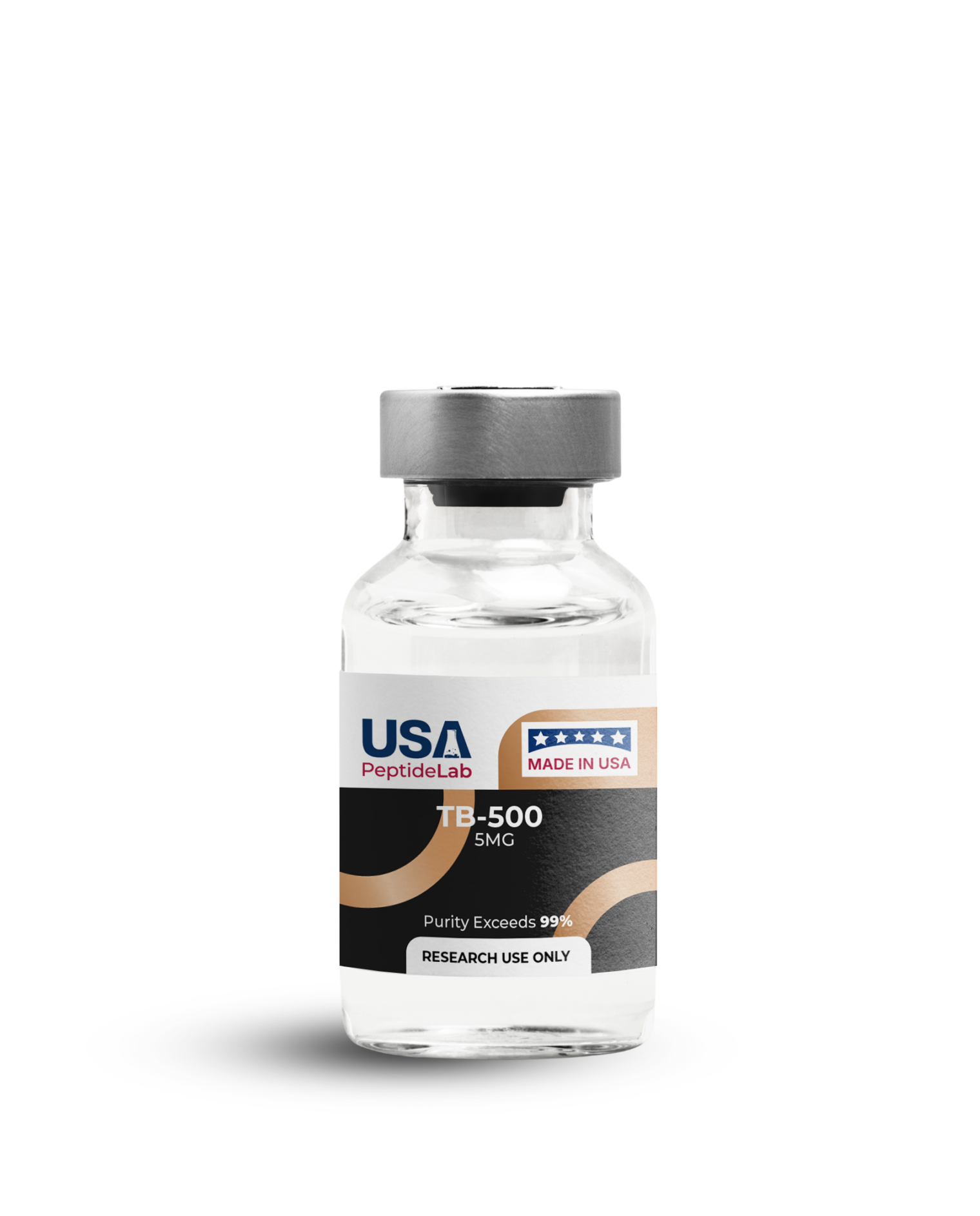
TB-500 (5mg/10mg)
From $65
- Size: 5mg
- Contents: TB-500
- form: Lyophilized powder
- Purity: >99%
- SKU: —
FREE Shipping on $200+ orders
| Quantity | Discount | Price / Item |
|---|---|---|
| 5 – 9 | 5% | — |
| 10 – 14 | 10% | — |
| 15+ | 15% | — |
TB‑500 (Thymosin Beta‑4 Fragment)
(Research Use Only) TB‑500 is a synthetic peptide corresponding to the active region of the naturally occurring protein Thymosin Beta‑4, supplied as a lyophilized powder for research applications. It is intended solely as a reference material for laboratory, in‑vitro, and analytical studies conducted by qualified professionals in appropriately equipped research facilities. This product is not a drug and is not intended for human or veterinary use, clinical applications, or any form of in‑vivo administration.
Composition and Form
-
Contents: TB‑500, available in 5 mg or 10 mg per vial
-
Form: Lyophilized powder
-
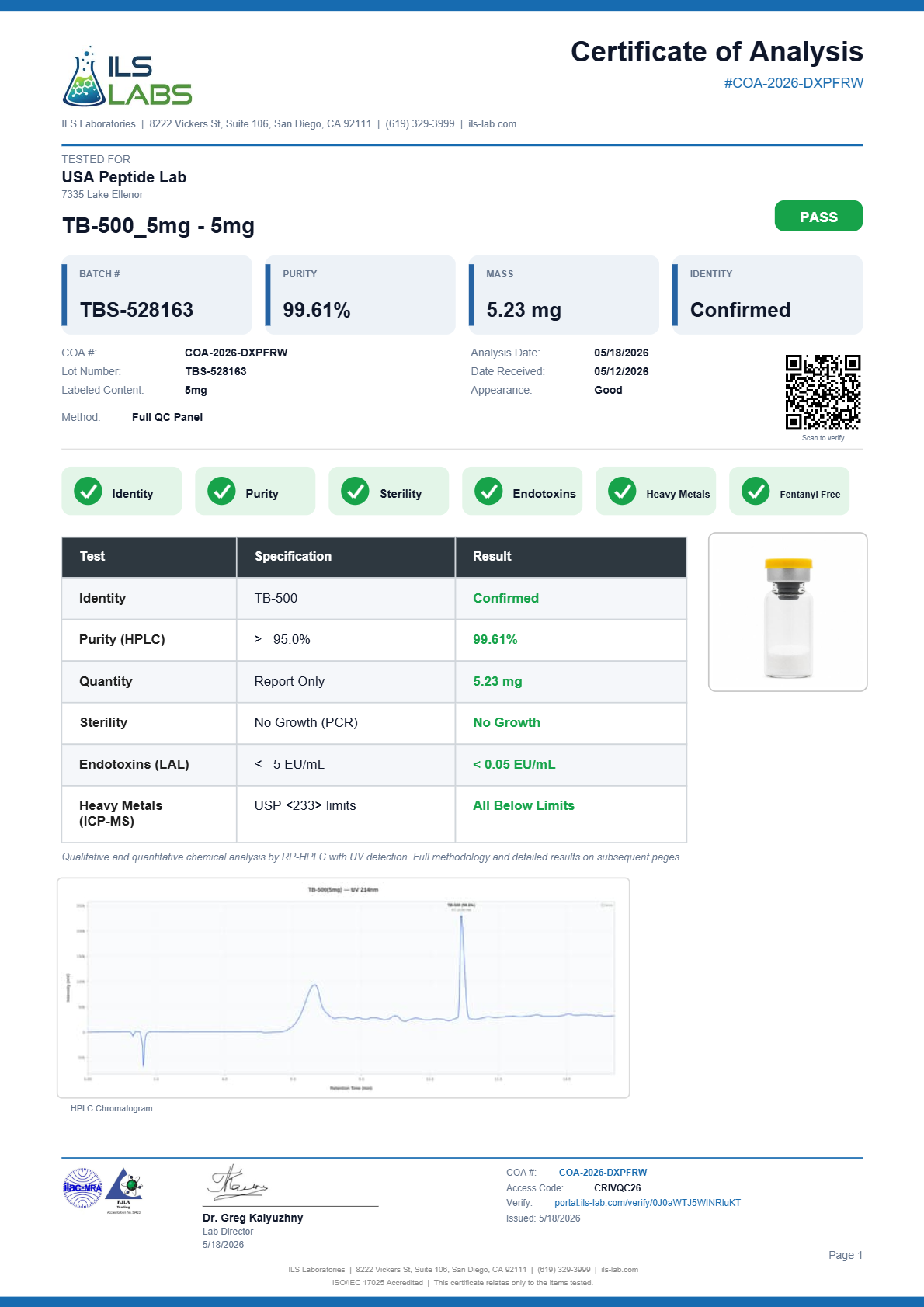
Purity: >99% (as reported on the Certificate of Analysis)
-
SKU: P‑TB500
-
Appearance: White to off‑white powder (typical for peptide reference materials)
Structural Information
TB‑500 is a synthetic 43–amino‑acid peptide modeled on a specific region of Thymosin Beta‑4 that has been studied in relation to actin‑binding and cytoskeletal dynamics in preclinical models. It is used as a research tool to investigate peptide–protein interactions, cell motility pathways, and related molecular mechanisms under controlled experimental conditions.
-
Molecular formula: C212H350N56O78S
-
Molecular weight: 4963 g/mol
-
Other designations: Thymosin Beta‑4 fragment, Tβ4 analog
Intended Use and Limitations
This product is supplied for Research Use Only (RUO) and is not intended for human or animal consumption. It must not be used for diagnosis, treatment, cure, or prevention of any disease and must not be compounded, ingested, injected, or otherwise administered to humans or animals. Any scientific literature or background information associated with TB‑500 or Thymosin Beta‑4 is provided solely to describe their chemical and research characteristics and should not be interpreted as guidance for clinical use, wound or tissue healing, hair growth, cardiac repair, “regeneration,” performance enhancement, or other health‑related outcomes.
Handling, Storage, and Quality
TB‑500 should be handled using standard laboratory practices appropriate for peptide reference materials, including suitable personal protective equipment and controlled laboratory conditions. Lyophilized vials should be stored according to internal laboratory protocols for peptides, typically in a cool, dry environment protected from light and moisture to help preserve material integrity prior to use.
Each lot is accompanied by a Certificate of Analysis (COA) providing identity, purity, and analytical data (e.g., HPLC, mass spectrometry), allowing researchers to document material quality and suitability for their specific experimental applications. Users are responsible for ensuring that all work with this compound complies with applicable regulations, institutional policies, and ethical standards.