NAD+
From $50
- Size: 5mg
- Contents: NAD⁺ (Nicotinamide Adenine Dinucleotide, oxidized form)
- form: Lyophilized Peptides
- Purity: >99%
- SKU: —
FREE Shipping on $200+ orders
| Quantity | Discount | Price / Item |
|---|---|---|
| 5 – 9 | 5% | — |
| 10 – 14 | 10% | — |
| 15+ | 15% | — |
NAD⁺ (Nicotinamide Adenine Dinucleotide, oxidized form)
(Research Use Only) NAD⁺ (nicotinamide adenine dinucleotide, oxidized form) is a pyridine nucleotide coenzyme composed of ribosylnicotinamide 5′‑diphosphate coupled via a pyrophosphate linkage to adenosine 5′‑phosphate, supplied as a solid or lyophilized powder for use as a reference material in laboratory, in‑vitro, and analytical studies conducted by qualified professionals in appropriately equipped research facilities. This product is not a drug and is not intended for human or veterinary use, clinical applications, or any form of in‑vivo administration.
Structural Information NAD⁺ is a dinucleotide coenzyme in which a nicotinamide ribonucleotide is linked to an adenosine ribonucleotide through a pyrophosphate bridge, and it is widely used in research as an oxidized redox carrier for studying dehydrogenase reactions, metabolic pathways, and electron‑transfer processes in vitro.
-
Compound type: Oxidized pyridine nucleotide coenzyme (β‑nicotinamide adenine dinucleotide).
-
Molecular formula: C21H27N7O14P2.
-
Molecular weight: Approximately 663.4 g/mol.
-
Other designations: β‑NAD, diphosphopyridine nucleotide, coenzyme I (oxidized form).
Intended Use and Limitations This product is supplied for Research Use Only (RUO) and is not intended for human or animal consumption. It must not be used for diagnosis, treatment, cure, or prevention of any disease and must not be compounded, ingested, injected, inhaled, implanted, absorbed, or otherwise administered to humans or animals, including in any “anti‑aging,” energy, metabolic, or wellness‑oriented applications. Any scientific literature or background information associated with NAD⁺ is provided solely to describe its chemical and research characteristics and should not be interpreted as guidance for clinical supplementation, nutraceutical use, fatigue management, or other health‑related outcomes.
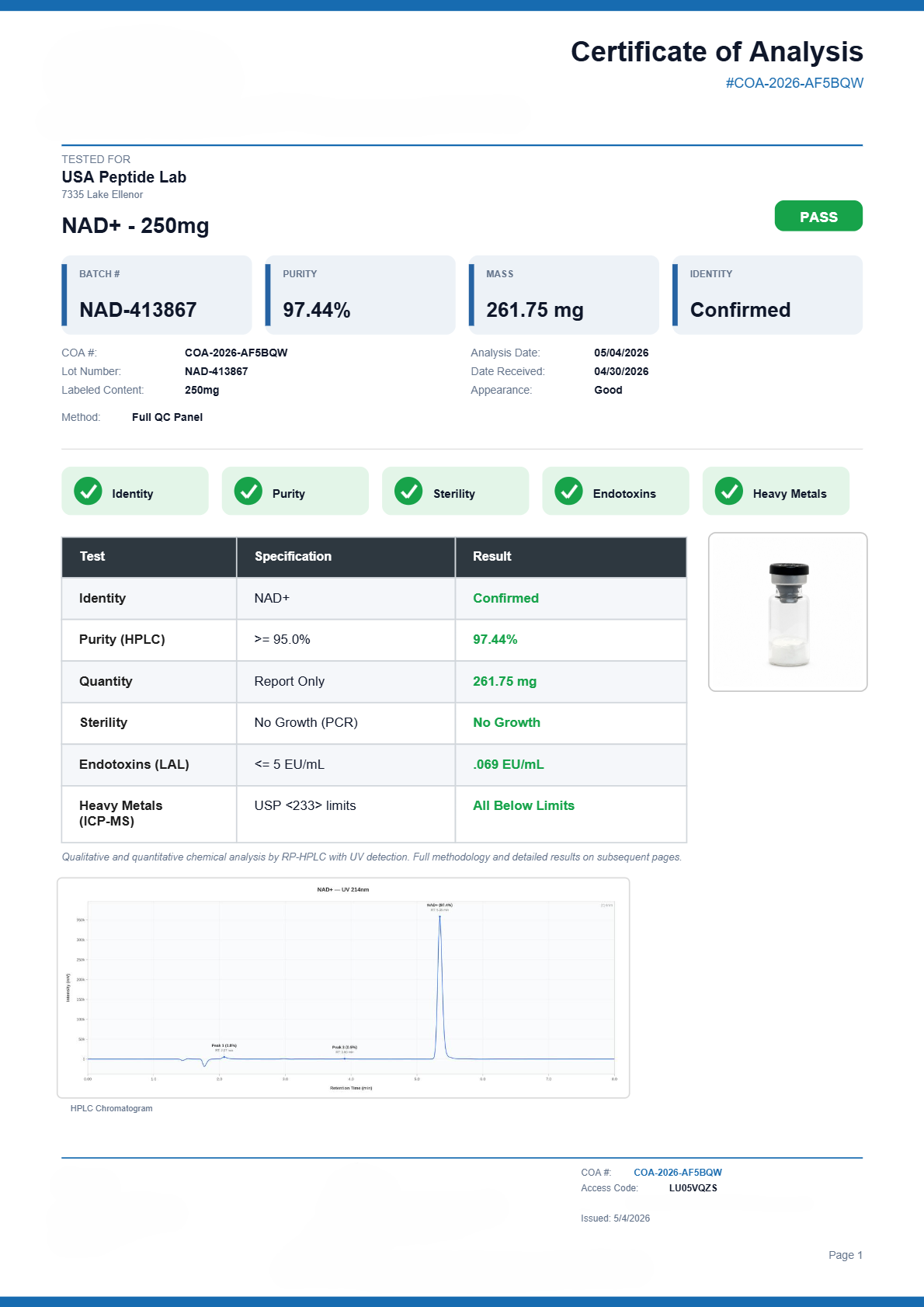
Handling, Storage, and Quality NAD⁺ should be handled using standard laboratory practices appropriate for hygroscopic biochemical reference materials, including suitable PPE and procedures to minimize exposure to moisture, heat, and light. Solid or lyophilized material should be stored according to internal laboratory protocols, typically in a cool, dry environment protected from light; aqueous solutions are generally more labile and should be prepared, stored, and discarded in accordance with validated laboratory procedures and stability data. Each lot may be accompanied by a Certificate of Analysis (COA) providing identity, purity, and analytical data (for example, HPLC and/or spectrophotometric characterization), allowing researchers to document material quality and suitability for their specific experimental applications.
Regulatory and Compliance Notice All products of this type are intended exclusively for research, laboratory, or analytical purposes and are not for human consumption or use in foods, dietary supplements, drugs, cosmetics, medical devices, or household chemicals. This material must not be used to create, manufacture, or compound finished dosage forms, and it is not supplied as a prescription medication, active pharmaceutical ingredient, or nutraceutical ingredient.