
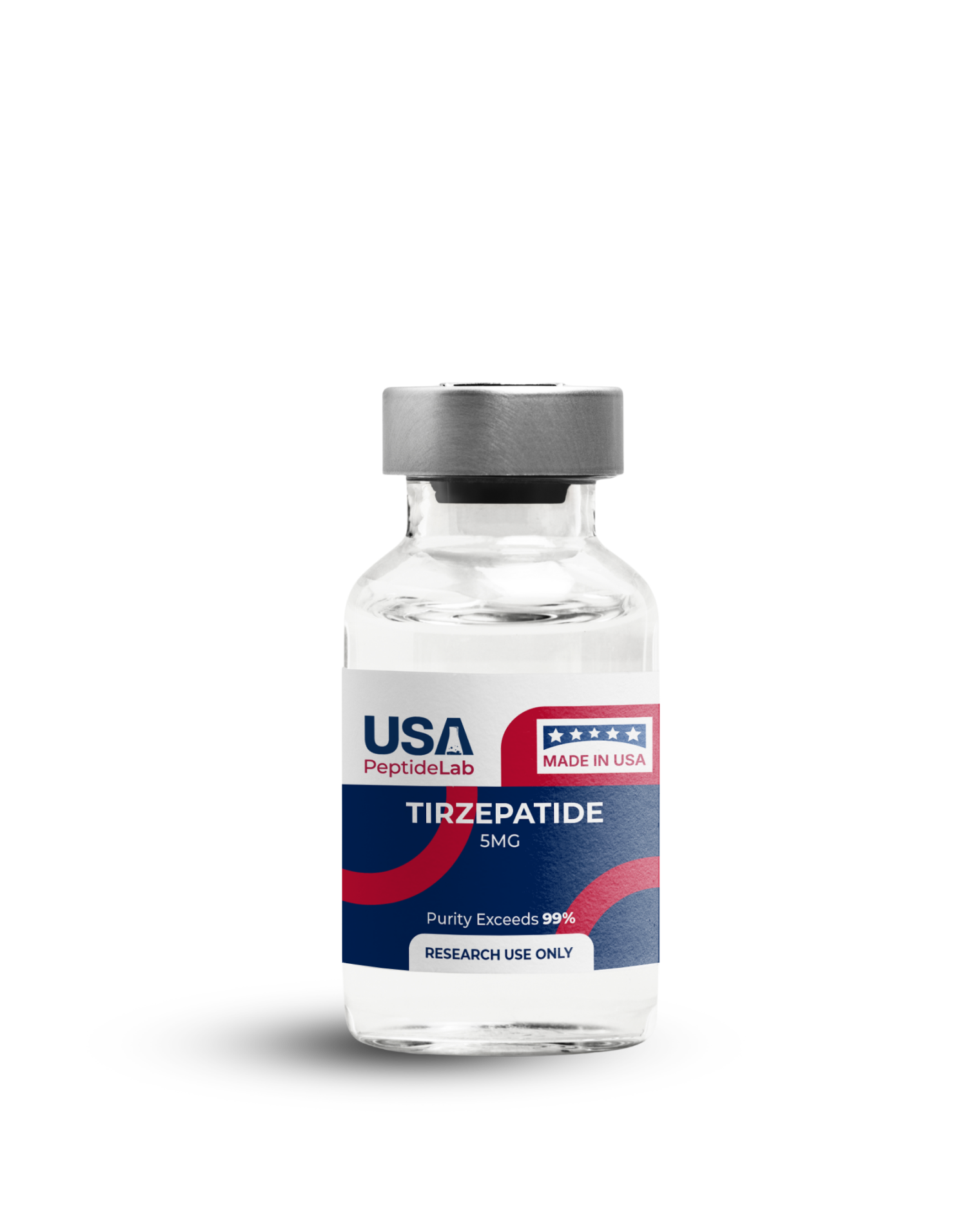
Tirzepatide (10mg)
$140
- Size: 5mg
- Contents: Tirzepatide
- form: Lyophilized powder
- Purity: >99%
- SKU: —
FREE Shipping on $200+ orders
| Quantity | Discount | Price / Item |
|---|---|---|
| 5 – 9 | 5% | — |
| 10 – 14 | 10% | — |
| 15+ | 15% | — |
(Research Use Only) Tirzepatide is a synthetic 39–amino acid peptide described in the scientific literature as a dual agonist at glucose‑dependent insulinotropic polypeptide (GIP) and glucagon‑like peptide‑1 (GLP‑1) receptors. It is supplied as a lyophilized powder for use as a reference material in laboratory, in‑vitro, and analytical studies conducted by qualified professionals in appropriately equipped research facilities. This product is not a drug and is not intended for human or veterinary use, clinical applications, or any form of in‑vivo administration.
Structural Information
Tirzepatide is a linear synthetic peptide based on the native GIP sequence, with modifications that confer long‑acting dual GIP/GLP‑1 receptor agonist activity. It is used in preclinical and mechanistic studies to investigate incretin‑related receptor pharmacology, peptide–receptor binding, and downstream signaling pathways under controlled experimental conditions.
Intended Use and Limitations
This product is supplied for Research Use Only (RUO) and is not intended for human or animal consumption. It must not be used for diagnosis, treatment, cure, or prevention of any disease and must not be compounded, ingested, injected, or otherwise administered to humans or animals. Any scientific literature or background information associated with Tirzepatide is provided solely to describe its chemical and research characteristics and should not be interpreted as guidance for clinical use, type 2 diabetes management, weight‑loss or obesity treatment, cardiovascular risk reduction, appetite or glycemic control, or other health outcomes.
Handling, Storage, and Quality
Tirzepatide should be handled using standard laboratory practices appropriate for peptide reference materials, including suitable personal protective equipment and controlled laboratory conditions. Lyophilized vials should be stored according to internal laboratory protocols for peptides, typically in a cool, dry environment protected from light and moisture to help preserve material integrity prior to use.
Each lot is accompanied by a Certificate of Analysis (COA) providing identity, purity, and analytical data (e.g., HPLC, LC‑MS), allowing researchers to document material quality and suitability for their specific experimental applications. Users are responsible for ensuring that all work with this compound complies with applicable regulations, institutional policies, and ethical standards.