Epithalon
$50
- Size: 5mg
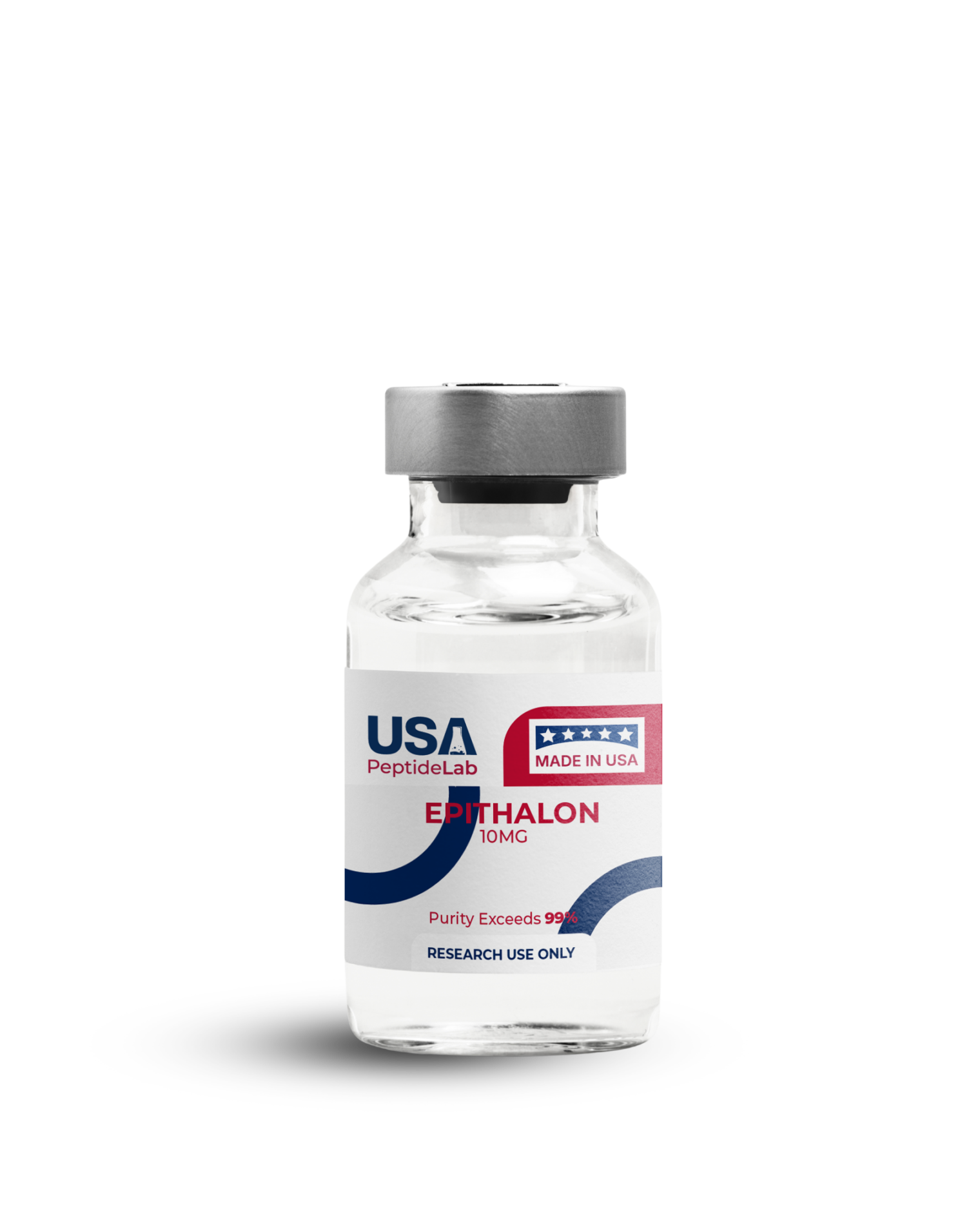
- Contents: Epitalon (10mg)
- form: Lyophilized powder
- Purity: >99%
- SKU: —
FREE Shipping on $200+ orders
| Quantity | Discount | Price / Item |
|---|---|---|
| 5 – 9 | 5% | — |
| 10 – 14 | 10% | — |
| 15+ | 15% | — |
Epithalon (10mg)
(Research Use Only) Epithalon (also known as Epitalon or AEDG peptide) is a synthetic tetrapeptide composed of the amino acid sequence Ala‑Glu‑Asp‑Gly, supplied as a lyophilized powder for research applications. This material is intended for use as a reference substance in laboratory, in‑vitro, and analytical studies conducted by qualified professionals in appropriate research facilities. It is not a drug and is not intended for human or animal use, clinical applications, or any form of in‑vivo administration.
Structural Information
Epithalon is a synthetic peptide analog that has been described in the scientific literature in relation to pineal and retinal peptide research. It is sometimes referred to as a synthetic counterpart to naturally occurring peptide preparations isolated from the pineal gland, such as Epithalamin, and is studied as an AEDG tetrapeptide in various experimental models.
-
Molecular formula: C14H22N4O9
-
Molecular weight: 390.34 g/mol
-
Other designations: Epitalon, Epithalone, AEDG peptide
Intended Use and Limitations
This product is supplied strictly for research use only (RUO), including laboratory, in‑vitro, and analytical applications under appropriate institutional oversight. It is not intended for diagnosis, treatment, prevention, or mitigation of any disease, and must not be compounded, ingested, injected, or otherwise administered to humans or animals. Any scientific references associated with Epithalon are provided solely to outline its characterization and context within the research literature and do not constitute usage recommendations or health, performance, or longevity claims.
Handling, Storage, and Quality
Epithalon should be handled using standard laboratory procedures for peptide reference materials, including appropriate personal protective equipment and controlled laboratory conditions. Storage should follow internal laboratory guidelines for lyophilized peptides, such as maintenance at suitable temperatures and protection from light and moisture to preserve material integrity.
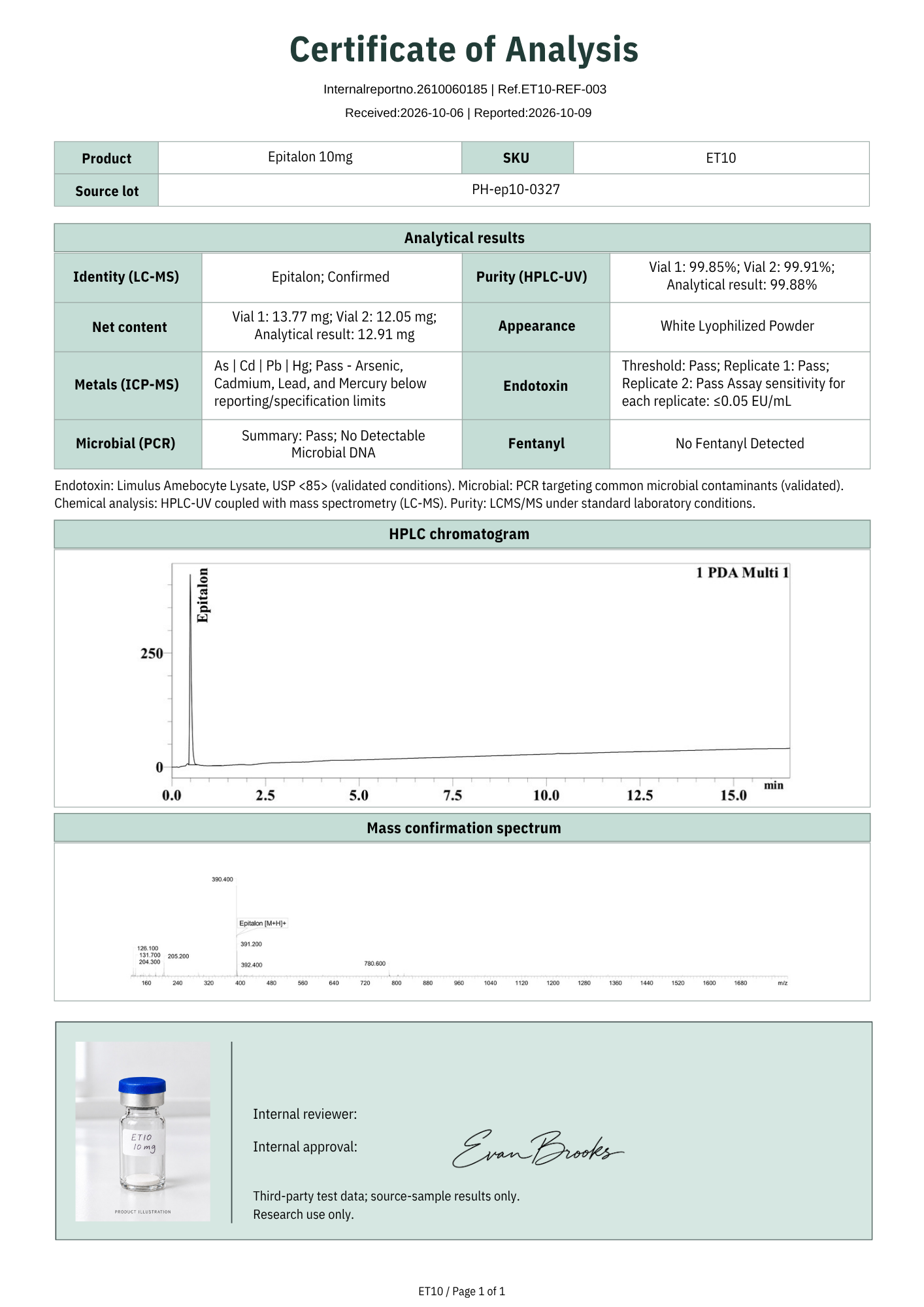
Each lot is accompanied by a Certificate of Analysis (COA) providing identity, purity, and related analytical data (e.g., HPLC and mass spectrometry) to support experimental documentation and quality assessment. Users are responsible for reviewing all documentation and ensuring compliance with applicable regulations and institutional policies before use.